

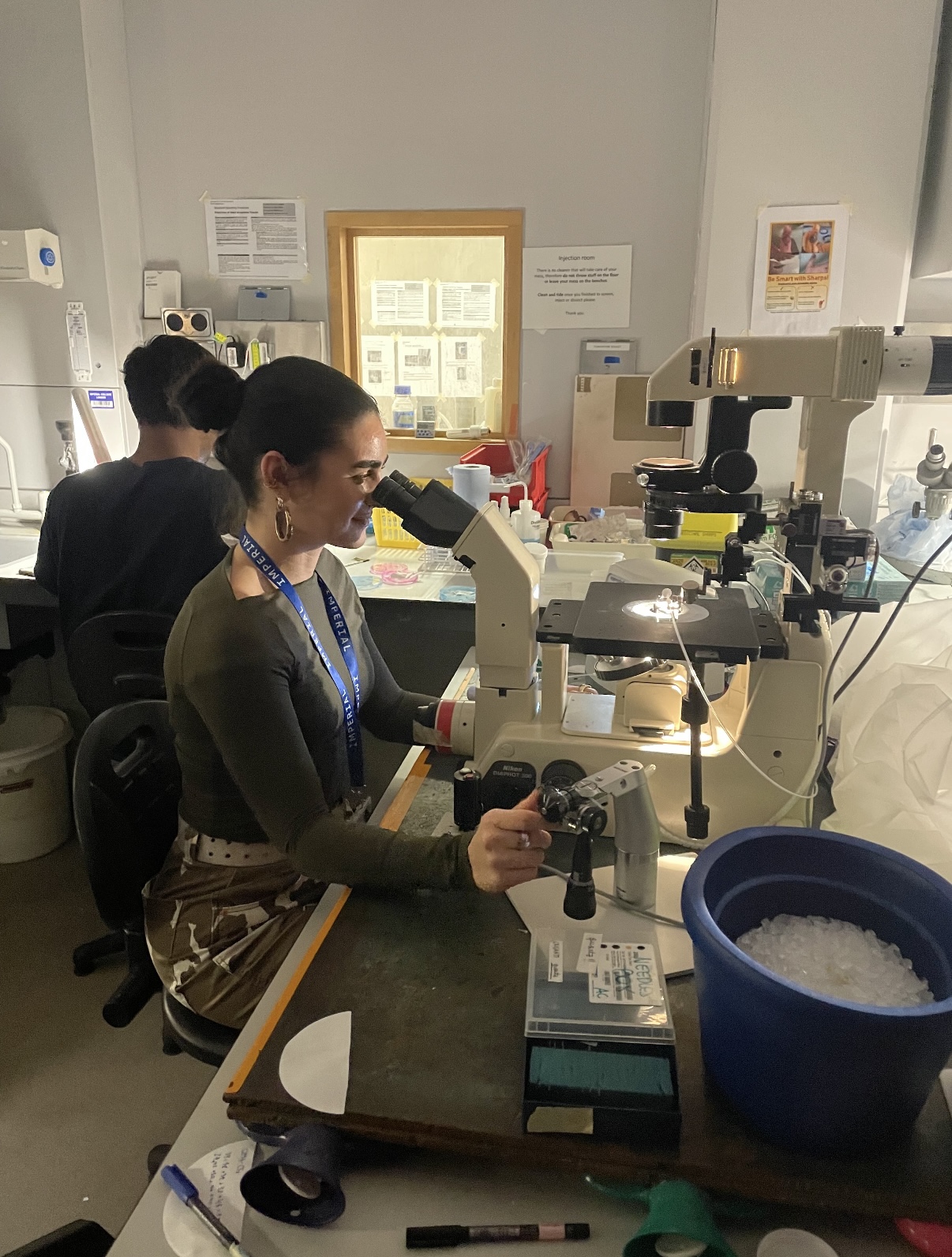
20 Feb 𝗖𝗲𝗹𝗶𝗻𝗲 𝗔𝗹𝗮𝗺𝗶 🔬🧬 𝗩𝗶𝘀𝗶𝘁𝗶𝗻𝗴 𝗥𝗲𝘀𝗲𝗮𝗿𝗰𝗵𝗲𝗿 🌍, 𝗜𝗺𝗽𝗲𝗿𝗶𝗮𝗹 𝗖𝗼𝗹𝗹𝗲𝗴𝗲 𝗟𝗼𝗻𝗱𝗼𝗻 🇬🇧 (𝟮𝟬𝟮𝟱)
As part of the STOP-MATING project, Celine Alami joined the Prof. Andrea Crisanti Lab at Imperial College London for a five-month secondment. Her work focuses on developing genetic tools to disrupt mosquito mating behaviour, with particular attention to Culex pipiens, a key vector of public health importance. During her stay, Celine is adapting molecular methods used in malaria mosquitoes to Culex, performing transcriptomic analyses of swarming genes and CRISPR-Cas9-mediated knockout experiments. The aim of her research is to identify and validate genes whose disruption could interfere with mosquito swarming. Upon returning to the Roberta Spaccapelo Lab at the Università degli Studi di Perugia, Celine will evaluate the swarming behaviour of the targeted Culex mosquito lines to further advance innovative and sustainable gene-editing-based vector control strategies.
👩💻🔗Project website link: https://stopmatingproject.eu/
-
- Screenshot
-
- Screenshot
-
- Screenshot
Sorry, the comment form is closed at this time.